10 Things to Look for When Buying Custom Tumblers in Bulk
This guide cuts through the noise and shows you exactly what matters before buying tumblers in bulk. Built on years of hands-on experience, it highlights the critical factors that impact cost, quality, and long-term success.
1/16/20269 min read


Insulated tumblers have become one of the most popular drinkware products in recent years. From outdoor brands and coffee shops to corporate giveaways and retail chains, more and more companies are looking to source custom tumblers in bulk.
However, if you are new to the drinkware industry, finding the right manufacturer can feel overwhelming. Prices vary widely, materials are different, and suppliers often emphasize different capabilities.
Based on our experience working with international brands as an OEM and ODM tumbler manufacturer, here are ten important factors that are worth paying attention to when sourcing tumblers in bulk.
1. Material and Food Safety
1.1 Stainless Steel
The first thing to confirm is the material used in the tumbler, especially the stainless steel grade and food-contact components.
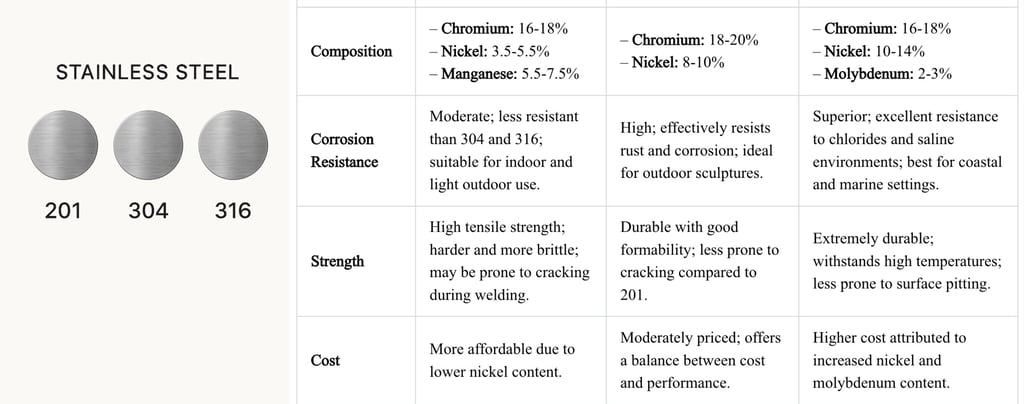
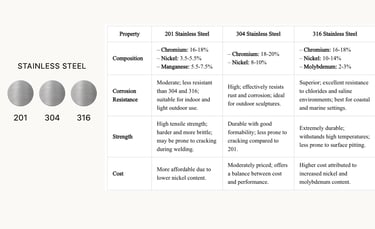
In the stainless steel insulated tumbler industry, the most common grades are:
SS201
SS304
SS304L
SS316 / SS316L
These grades increase in corrosion resistance and price.
SS304 is the most widely used food-contact stainless steel for tumblers.
SS316 offers even better corrosion resistance and is often used in higher-end products.
SS201, on the other hand, is sometimes used for the outer wall of a tumbler to reduce cost, since it does not normally contact beverages.
When discussing specifications with suppliers, it is always a good idea to confirm:
the steel grade used for the inner wall
the steel grade used for the outer wall
whether material certificates are available
These details affect not only cost, but also durability and long-term product stability.
1.2 Plastic Materials in Lids
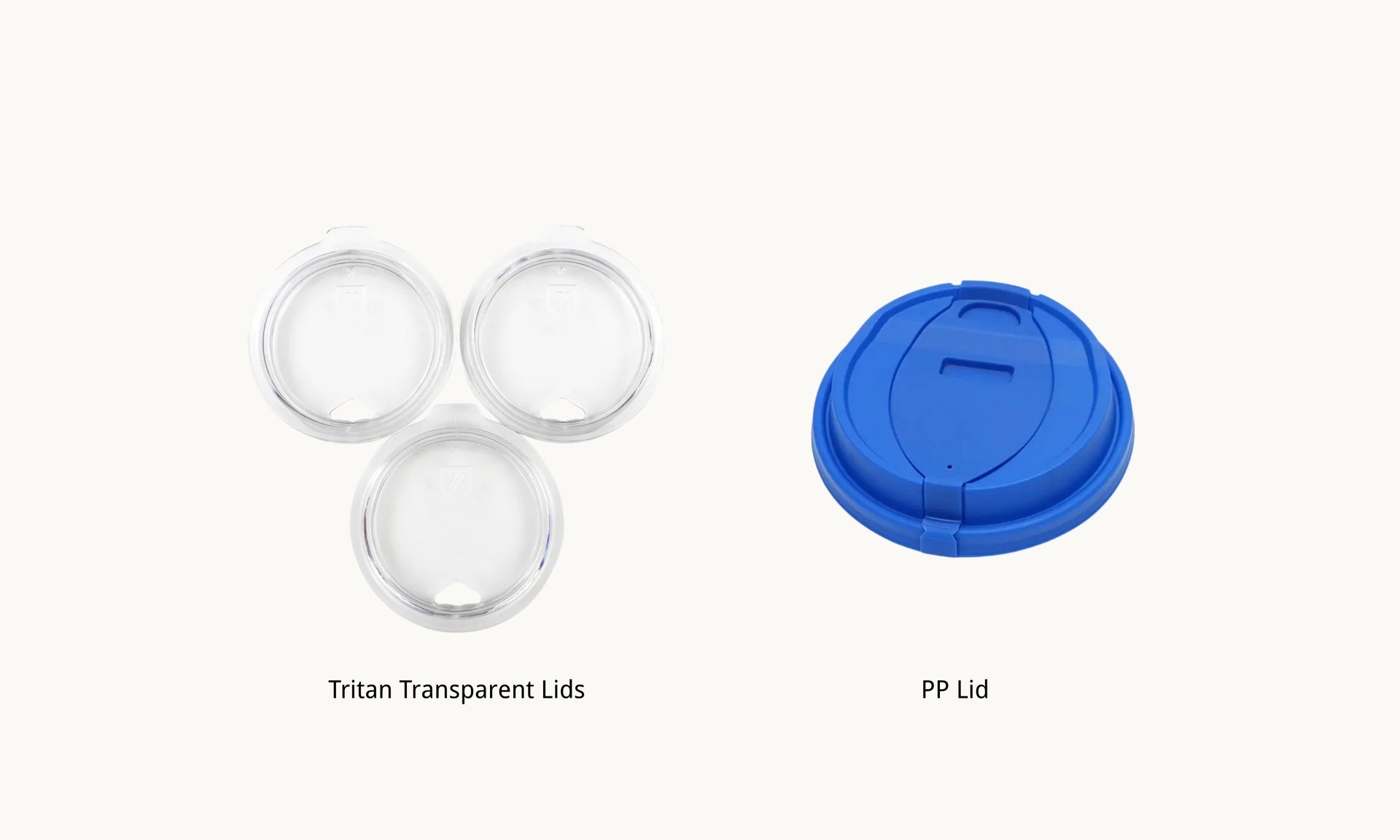
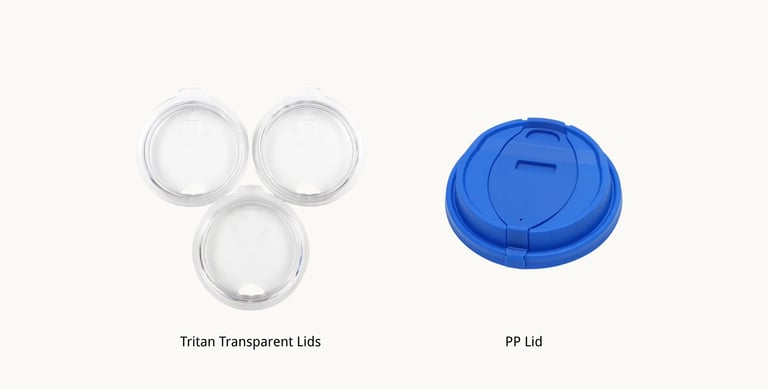
Most tumbler lids contain plastic components. The most common materials include:
PP (polypropylene)
This is the most widely used material for lids. It offers good food safety, heat resistance around 100–120°C, and excellent fatigue resistance.
Polypropylene (PP) is generally difficult to make fully transparent like glass or Tritan. It is more commonly produced as translucent material or used for colored, opaque lids.
Tritan
Tritan is a more premium transparent plastic. It is known for:
high clarity
impact resistance
BPA-free composition
In many cases, Tritan is gradually replacing polycarbonate (PC), which historically raised concerns because it could contain BPA.
For plastic parts, whether they are BPA-Free is the mostly asked question.
1.3 Silicone Components
Silicone is typically used for:
sealing rings (O-rings)
straw valves
flexible mouthpieces
If silicone parts are involved, always confirm that the supplier uses food-grade silicone.
2. Vacuum Insulation Performance
The defining feature of an insulated tumbler is its vacuum layer.
A double-wall vacuum tumbler keeps drinks hot or cold because the air between the two walls is removed. If the vacuum layer is compromised, the insulation performance drops significantly.
A professional manufacturer should have methods to test vacuum integrity during production.
Besides the vacuum itself, insulation performance also depends on several other factors.
For example, the lid structure plays a role in heat retention. Bottle opening size matters as well. In general, narrow-mouth bottles retain heat better than wide-mouth designs. And the silicone sealing ring does not only prevent leakage—it also helps maintain temperature.
Some higher-end tumblers also include copper plating on the outside of the inner wall, which further improves insulation performance.
Other influencing factors include:
bottle capacity
stainless steel thickness (typically around 0.4–0.6 mm)
YETI tumblers are well known for their rugged durability and good temperature retention, thanks in part to the thicker stainless steel used in the outer wall.
3. Surface Finish and Decoration
From a consumer’s perspective, the appearance of the tumbler is often the most noticeable feature.
Color, graphics, and surface texture all contribute to the product’s perceived quality.
3.1 Base Colors
The base color (background color) of a tumbler is usually applied using either powder coating or spray painting.
Powder coating forms a thicker, more durable layer. It is usually matte or slightly textured, and it is more resistant to scratches and chipping.
Spray painting creates a thinner, smoother coating. It can achieve glossy or metallic effects, but it is generally less durable than powder coating.
Surface texture also varies across markets. In North America and Europe, powder coating is very common. In some other markets, traditional spray painting is more widely used.
Finishes may include:
glossy
matte
semi-matte
soft-touch coatings
3.2 Graphics/Patterns
Graphics can be applied through several methods, such as:
heat transfer printing
water transfer decals
laser engraving
UV 3D printing
For complex graphics or curved bottle shapes, UV 3D printing has become increasingly popular. It creates a subtle raised texture that gives the design a more premium look.
Most bulk tumbler factories support full customization, although custom colors and graphics typically require a minimum order quantity (MOQ). When the order quantity exceeds 3,000 units, suppliers generally accept customized surface finishes.
4. Lid Design
Leak prevention is the basic requirement for any tumbler lid, but modern drinkware design goes far beyond that.
Many successful products on the market today stand out because of their innovative lid designs.
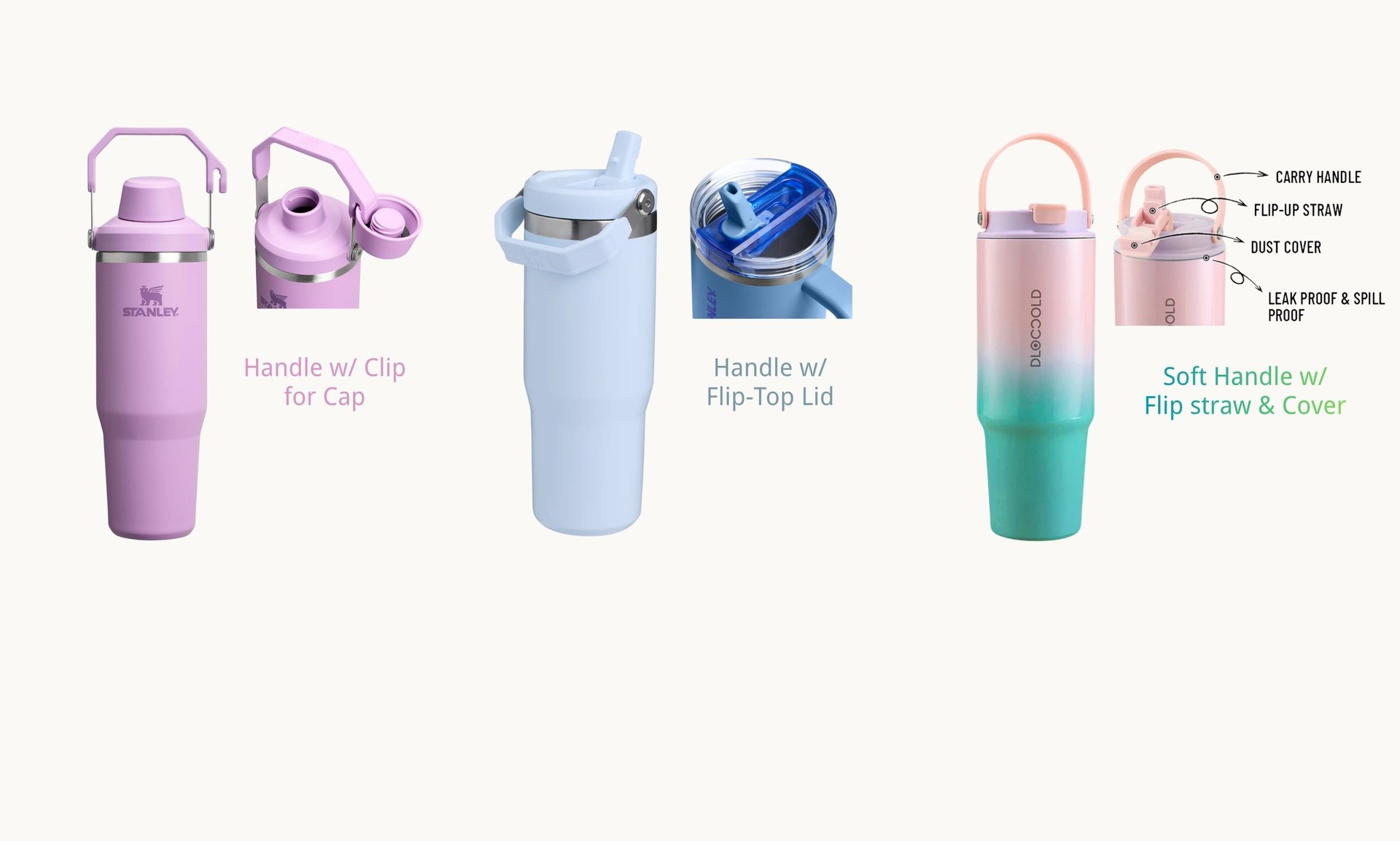
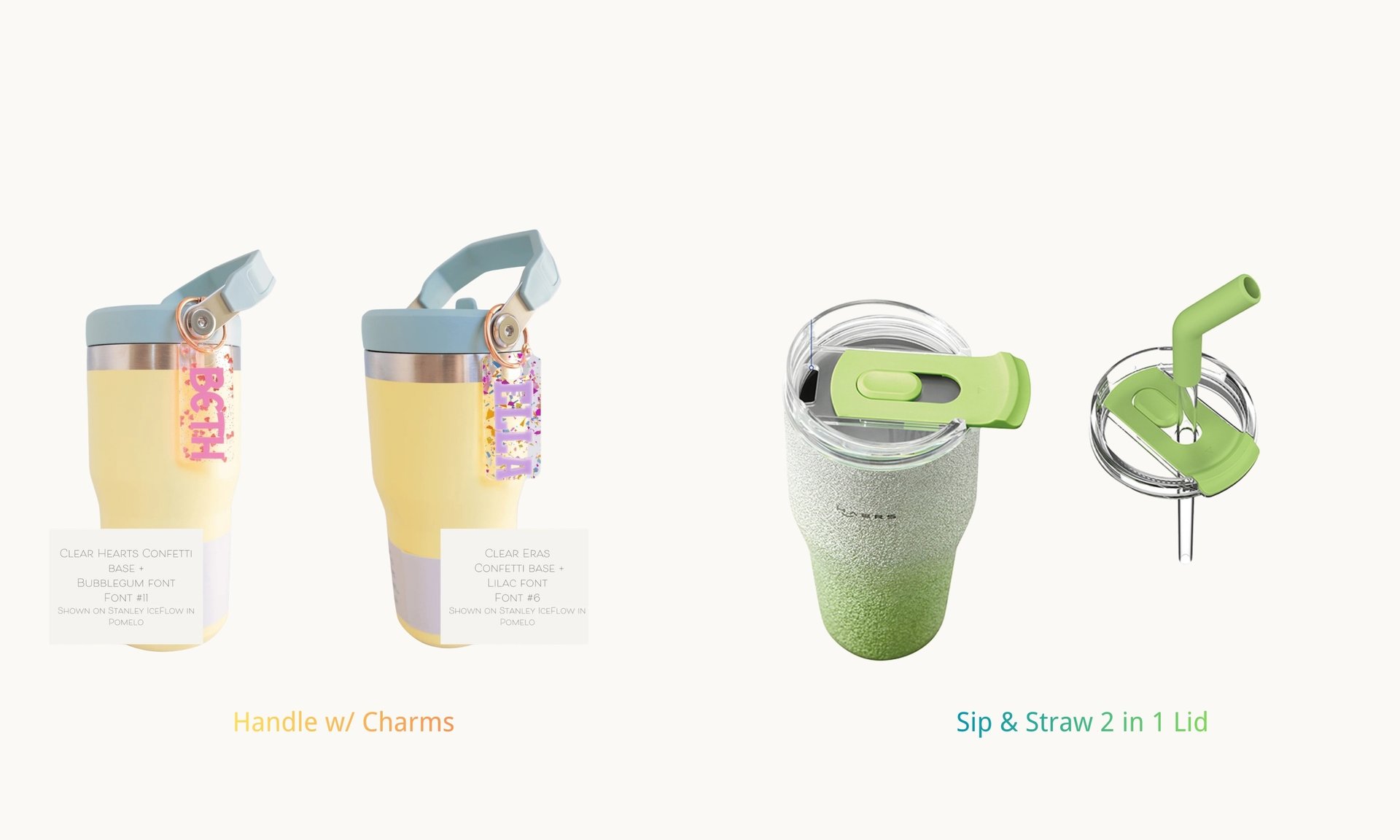
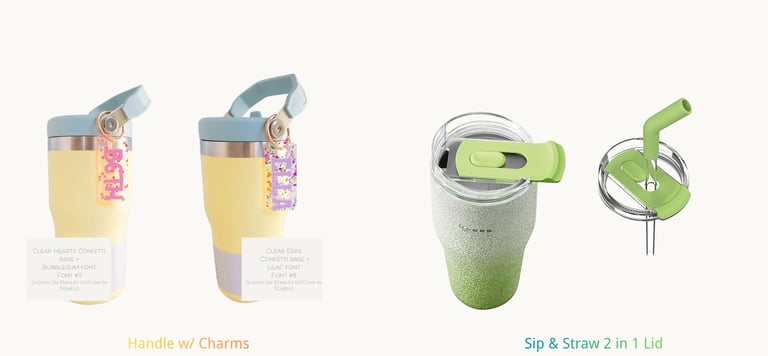
For example, the popular Owala FreeSip lid allows users to drink in two different ways—either sipping directly or using a built-in straw.


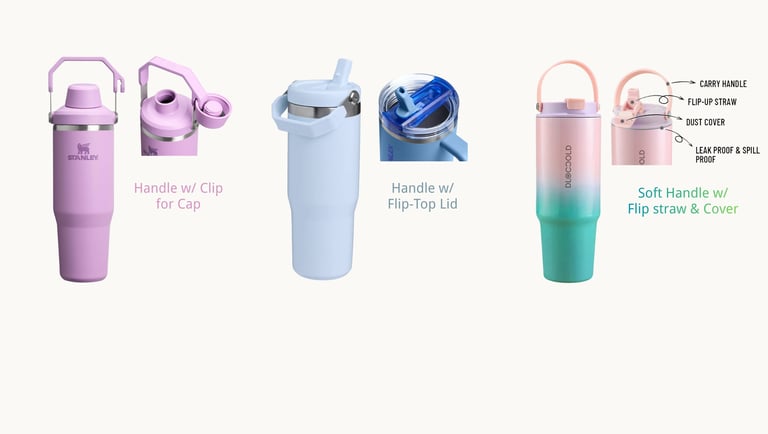
Other tumblers emphasize portability by including:
carry handles
flip-top drinking spouts
with charms
When evaluating suppliers, it is worth paying attention to their lid designs and mold library.
If their product photos only show the exterior, ask for additional images or videos that highlight the lid structure. Sometimes the most interesting features are hidden in the details.
5. Capacity and Dimensions
Capacity depends largely on the intended use.
For example:
500 ml (16 oz) or smaller tumblers are common for coffee or office use
750 ml (25 oz) to 1.2 liter (40 oz) bottles are popular for outdoor activities and travels
Capacity also affects cost, as larger tumblers typically require more material.
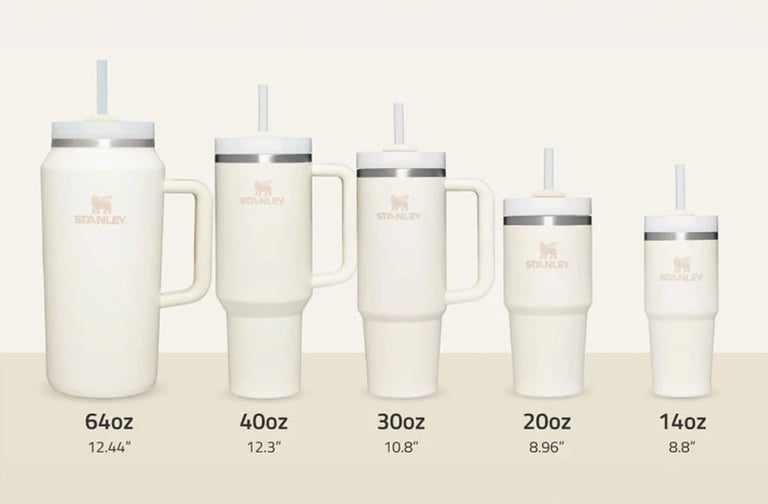
For buyers who are new to stainless steel vacuum tumbler sourcing, sizes like 20 oz vs. 40 oz may not be easy to visualize. In that case, asking suppliers to provide diameter and height measurements can help you better understand the physical scale of the product.
A well-known example is the Stanley Quencher series, which comes in 20, 30, and 40 oz versions, with the 40 oz model becoming particularly iconic.
6. MOQ and Production Capacity
Minimum order quantities vary depending on whether the product is ready-made or customized.
If a supplier already has inventory in stock, the MOQ may be relatively small—sometimes only a few dozen to a few hundred units. This is useful for testing the market quickly.
For customized products with specific colors or graphics, the MOQ is usually higher, typically 3,000 to 5,000 units, depending on the supplier’s manufacturing flexibility.
Once your brand grows, production capacity becomes more important. A useful rule of thumb is that a factory’s monthly capacity should be significantly higher (e.g. 10x) than your expected demand, otherwise production delays may occur—especially if you are not their largest customer.
7. Customization: OEM vs. ODM
There are different levels of customization when sourcing tumblers.
The simplest option is choosing an existing product and applying minor customizations such as logo printing or color changes.
This approach allows brands to launch products quickly and avoid expensive tooling costs.
However, if your goal is stronger product differentiation, you may want to consider ODM development.
A capable ODM manufacturer should have:
industrial designers
structural engineers
manufacturing/process engineers
prototype development capabilities
a structured NPD (New Product Development) process
Typical development stages may include:
concept design
3D rendering
sample development
engineering validation
pilot production
When both OEM customization and ODM development are involved, the cooperation between brand and manufacturer becomes much closer. It is therefore important to evaluate the supplier’s reliability, technical capability, and long-term stability before you invest time and money in the molding and prototyping processes with a certain supplier.
8. Quality Control and Certifications
Quality is not something that appears only at the final inspection stage. It is built through process control throughout the entire product lifecycle from design, production to distribution.
A well-organized manufacturer should have clear procedures covering:
raw material inspection
in-process inspection
finished product inspection
For key characteristics such as vacuum performance or leak resistance, testing frequency should be clearly defined.
In terms of certificates, many professional factories operate under recognized management systems such as:
ISO 9001 - Quality Management System (QMS)
ISO 14001 - Environmental Management System (EMS)
ISO 45001 - Occupational Health and Safety Management System (OHSMS)
Depending on the destination market, additional compliance requirements may apply. For example, food-contact materials sold in Europe or North America often need to comply with relevant FDA or EU food-contact regulations.
9. Logistics and Lead Time
Once specifications and production schedules are confirmed, logistics becomes the next step.
If the product or packaging is customized, you should also confirm the packing method and the number of units per carton with the supplier.
As for logistics, most suppliers do not take responsibility for international shipping due to the risks involved. However, most manufacturers can provide:
export carton packaging
delivery to a seaport or airport
International freight is usually arranged by the buyer’s freight forwarder.
In terms of lead time, 30–45 days is generally considered normal, unless your order volume is exceptionally large (e.g. 100,000 or more).
It is also important to consider seasonal production cycles. In China, production schedules become particularly busy before the Chinese New Year, which usually falls in January or February. Planning extra lead time during this period can help avoid unexpected delays.
10. Payment Terms and Risk Management
Finally, payment terms should be clearly discussed before placing an order.
A common arrangement for new partnerships is:
30% deposit before production, 70% balance before shipment.
As the cooperation deepens and trust builds, you can gradually negotiate more favorable terms for your cash flow—such as adjusting the deposit-to-balance ratio and extending the payment period for the remaining balance.
At the same time, manufacturers also face risks related to delayed payments or defaults. Understanding each other’s concerns helps build a healthier long-term partnership.
Final Thoughts
Sourcing custom stainless steel water bottles and tumblers is not only about finding the lowest price. A reliable manufacturing partner should be evaluated across multiple dimensions, as mentioned above.
Taking the time to evaluate these factors carefully will help ensure your brand launches products that are both high-quality and competitive in the market.
If you are currently looking for a reliable OEM or ODM tumbler manufacturer, feel free to reach out. We are always happy to discuss product ideas and help brands bring new vacuum drinkware products to market.
Frequently Asked Questions (FAQ)
1. What is the typical Minimum Order Quantity (MOQ) for bulk custom tumblers?
Minimum Order Quantities (MOQs) depend on the level of customization. For standard stock colors with simple logo printing (laser engraving or silk screen), MOQs can be as low as 100 to 500 units. However, for fully customized Pantone colors, specialized finishes (like powder coating or liquid gradient), or custom packaging, the standard factory MOQ usually starts at 1,000 to 3,000 units per design.
2. How long does the mass production and delivery process take?
Generally, the entire process takes about 25 to 40 days from proof approval to shipment:
Sample Production & Approval: 5–7 days for customized logo samples.
Mass Production: 20–30 days depending on order volume and finish complexity.
Shipping: 7–10 days via air freight, or 25–35 days via sea freight.
3. Which logo printing method is best for stainless steel tumblers?
The choice depends on your design, budget, and durability requirements:
Laser Engraving: Most durable, dishwasher-safe, gives a sleek metallic look (ideal for minimalist branding).
Silk Screen Printing: Best for 1-2 color solid designs and cost-effective for large volumes.
3D Digital Printing / UV Printing: Ideal for full-color, complex graphics, gradients, or full-wrap patterns.
Powder Coating with Laser Etching: Premium tactile feel, scratch-resistant, and high-end aesthetic.
4. How can I ensure the tumblers meet food safety compliance (FDA/LFGB)?
Always request updated compliance test reports from your manufacturer before placing a mass order. Ensure the stainless steel material used for the inner liner is food-grade SUS304 (18/8 stainless steel) or SUS316, and that all plastic lids and silicone seals are BPA-free. Reputable OEM manufacturers can provide third-party lab certifications (such as FDA, LFGB, or REACH).
5. Can I order pre-production samples before committing to a bulk order?
Yes, ordering a pre-production sample is highly recommended to inspect color accuracy, insulation quality, and logo placement. Most manufacturers charge a nominal custom sample fee (often $50–$150 depending on the technique), which is typically refunded or credited toward your total cost once you place the full production order.
BACK TO HOME

Make Contact Now
Request a quote, or discuss your custom drinkware project
Engineered for Those Who Expect More
Your trusted OEM/ODM manufacturer of insulated containers.
CONTACT US
subscribe for THE latest catalog
Email: hello@yunuocup.com
© 2019-2026 YUNUO DRINKWARE. ALL RIGHTS RESERVED.
Address: No. 6, Jiangwan Rd., Wuyi County, Zhejiang 321200, China
RESOURCES